Skincare Ingredient Checker: Know What’s In Your Products
Published September 5, 2026
Skincare ingredient lists can be long and hard to understand. A skincare ingredient checker makes this easier. These tools help you identify ingredients, learn their functions, and spot potential irritants or anything relevant to your skin concerns.
These tools help when comparing products or checking for ingredients your skin doesn’t tolerate. They are research tools, not medical diagnostics. Use their ratings as a starting point. Always cross-check with the current product label. Consult a qualified professional when needed.
What Is a Skincare Ingredient Checker?
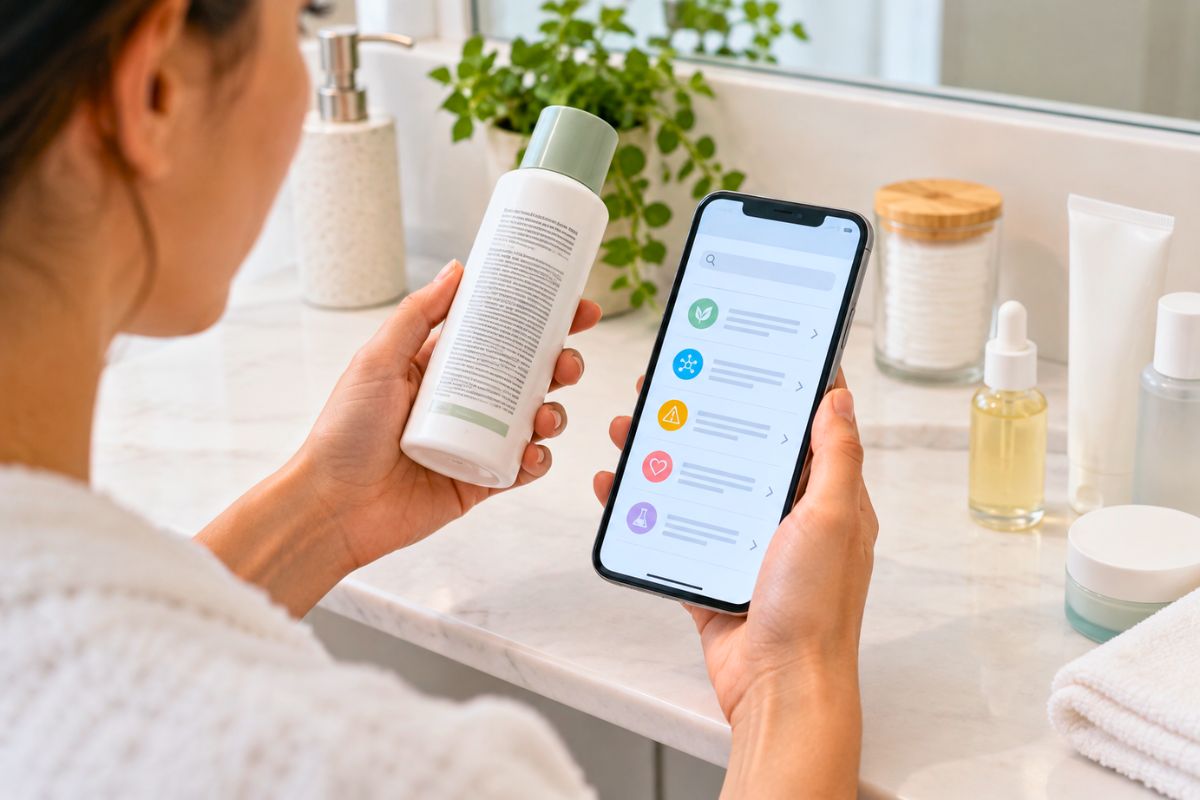
A skincare ingredient checker is an online tool, database, or app. It analyzes the ingredients found in cosmetic and skincare products.
Depending on the checker, you may be able to:
- Paste a product’s ingredient list into a search tool
- Scan a product barcode
- Search for a specific product
- Look up individual ingredients
- Learn what each ingredient does
- Identify potential irritants or allergens
- Find ingredients associated with particular skin concerns
- Compare different products
Some checkers provide color-coded ratings or numerical scores. These make results easier to interpret at a glance, but a score does not necessarily mean a product is objectively “safe” or “unsafe.”
Start with the current ingredient list on the product packaging or manufacturer’s website. Formulas can change, and ingredient databases may not always reflect the version currently sold.
Why Use a Skincare Ingredient Checker?
Ingredient names can be unfamiliar even when they serve routine skincare functions. A checker provides a convenient way to research what those ingredients do and whether they relate to your concerns.
You might use one to:
- Understand unfamiliar cosmetic ingredients
- Check for known skin triggers
- Compare similar products
- Identify active ingredients
- Research ingredients associated with specific skin concerns
- Look beyond marketing claims
If a checker flags an ingredient, look beyond the warning. Whether it causes a problem depends on several factors: the substance itself, its concentration, formulation, usage frequency, and your sensitivity.
How Does a Skincare Ingredient Checker Work?
Ingredient checkers do not all work the same way. Some are ingredient databases explaining each substance. Others analyze full product formulas, flag concerns, or assign ratings based on their criteria.
If you’re using one to check a product:
- Start with the current ingredient list.
- Enter the ingredients or scan the barcode, if supported.
- Review what the checker says about individual ingredients.
- Investigate any warnings or ratings rather than accepting them at face value.
- Compare the results with the product label.
- Consider the complete formula and how you intend to use it.
Different checkers can produce different results because their databases, criteria, and rating systems differ. A higher score on one platform does not necessarily mean the product is better for your skin.
How to Read Ingredients With a Skincare Ingredient Checker
Knowing a few basics about cosmetic labels makes an ingredient checker much easier to interpret.
Check the Current Ingredient List
Start with the ingredient list on the product you’re buying. If a database shows a different formula, check the manufacturer’s current information and, if possible, the packaging. Products can be reformulated, so older database entries may not match the formula you have.
Understand INCI Names
Cosmetic ingredients are commonly identified using standardized INCI (International Nomenclature Cosmetic Ingredients) names. These names can look technical, but they provide a consistent way to identify ingredients.
For example:
- Glycerin: A humectant used to help attract and retain water
- Niacinamide: A form of vitamin B3 commonly used in skincare
- Tocopherol: A form of vitamin E
- Squalane: An emollient used to soften the skin
- Sodium hyaluronate: A form of hyaluronic acid typically used in hydrating products
An ingredient checker can be especially helpful when you encounter an ingredient you don’t recognize.
Consider Ingredient Order
Ingredients are indicated in descending order of concentration, with some exceptions based on labeling rules. This gives a rough idea of a formula’s main components. However, ingredient position does not reveal exact concentration or product effectiveness.
Look at Active Ingredients
Many skincare products contain active ingredients intended to address particular concerns. Depending on the product, you may encounter:
- Niacinamide
- Vitamin C
- Salicylic acid
- Azelaic acid
- Retinoids
- Alpha hydroxy acids
- Peptides
An ingredient checker can explain what an ingredient does but cannot tell you if a product is right for your skin.
What Should You Look for in an Ingredient Checker?
A good skincare ingredient checker should do more than label ingredients as “good” or “bad.” It should explain why an ingredient has been flagged.
Look for tools that explain:
- What an ingredient does
- Its role in the formula
- Potential irritation or allergy concerns
- The evidence or sources behind the information
- How current the product data is
- How any rating or score is calculated
Be cautious with numerical or color-coded scores that lack explanation. Two checkers may rate the same ingredient differently due to different criteria. The reasoning behind a rating is usually more useful than the number.
Which Skincare Ingredients May Cause Irritation?
There’s no universal list of “bad” skincare ingredients. An ingredient may irritate one person but be well tolerated by another. An ingredient checker can help investigate specific concerns, but a single warning is not a reason to avoid an entire category.
Fragrance
Fragrance is a known trigger for some people. An ingredient checker can help you spot products containing fragrance or related ingredients. However, it cannot tell if a reaction is irritation or an allergic response.
Essential Oils
Plant-derived does not automatically mean non-irritating. Some essential oil components can cause irritation or allergic reactions in susceptible people.
Cleansing Agents
Sodium lauryl sulfate (SLS) and sodium laureth sulfate (SLES) are common cleansing agents. They’re not inherently harmful. However, some people find certain formulas drying or irritating depending on the product and skin type.
Active Ingredients
Retinoids, exfoliating acids, and other actives can cause dryness, redness, peeling, or irritation. The risk is higher when introduced too quickly or layered with other irritating products. Product formulation, type, and usage all affect how your skin responds.
Pregnancy Skincare Ingredient Checker: What to Know
A pregnancy skincare ingredient checker is useful for researching product ingredients but should not be used as a definitive guide on product safety during pregnancy.
If you’re pregnant, planning to conceive, or breastfeeding, talk to your obstetrician, midwife, or dermatologist about your skincare routine, especially if you use prescription products or specific active ingredients.
When using a checker for pregnancy-related research:
- Start with the current product label.
- Identify the ingredients you need to investigate.
- Review the checker’s information and sources.
- Confirm pregnancy-specific concerns with your healthcare professional.
A checker can help identify ingredients to research and discuss with a professional but cannot provide individualized medical advice.
Are Skincare Ingredient Checkers Accurate?
Skincare ingredient checkers can be useful but their results are not definitive. Different platforms may rate the same product differently due to varying databases, criteria, scoring systems, or interpretations. Product data can become outdated when manufacturers change formulas.
A warning or low score needs context. It does not automatically mean the product is dangerous or unsuitable for everyone. Ingredient relevance depends on factors like concentration, formulation, intended use, exposure, and individual sensitivity.
When a checker raises a concern, ask:
- Why was the ingredient flagged?
- What type of concern is involved?
- What evidence or criteria support the rating?
- Does the current product formula contain the ingredient?
- Is the concern relevant to your skin or intended use?
What a Skincare Ingredient Checker Can’t Tell You
An ingredient checker can help research a formula but cannot tell how your skin will respond or determine the cause of a reaction.
It generally cannot:
- Diagnose a skin condition
- Confirm an allergy
- Determine your individual tolerance
- Guarantee that a product will work for you
- Replace professional medical assessment
- Provide individualized pregnancy advice
A product containing generally well-tolerated ingredients can still cause a reaction in an individual. Conversely, an ingredient flagged by an app may not be problematic for every user.
How to Use a Skincare Ingredient Checker Effectively
To get useful results, start with the product you actually have and use the checker to investigate specific questions rather than simply choosing the product with the highest score.
Start With the Product Label
Use the current ingredient list from the packaging or manufacturer whenever possible.
Check the Ingredients
Paste the list into your chosen skincare ingredient checker or scan the barcode if that feature is available.
Investigate Warnings
Don’t stop at a red, green, or numerical rating. Find out what triggered it and whether the concern is relevant to your skin or use.
Check Your Known Triggers
If you know that your skin reacts to fragrance, a particular preservative, or another ingredient, search specifically for it.
Consider the Whole Formula
Don’t judge the product by one ingredient alone. Consider the complete formulation, concentration where available, product type, intended use, and frequency of application.
Introduce New Products Gradually
When possible, introduce new products one at a time. If irritation develops, this makes it easier to identify a potential trigger.
Common Mistakes When Using a Skincare Ingredient Checker
- Treating every warning as dangerous: A flagged ingredient is not automatically harmful or unsuitable for everyone. Check why it was flagged and if the concern applies to you.
- Assuming natural means safer: Plant-derived ingredients can still cause irritation or allergic reactions. “Natural” does not automatically mean safer or better for your skin.
- Relying on outdated product information: Ingredient databases may not reflect recent reformulations. Compare checker results with the current product label, especially when buying a product you have used before.
- Focusing on one ingredient: Don’t judge a product by a single ingredient. Consider the complete formula, intended use, and your skin’s characteristics.
- Treating a score as a medical verdict: A checker can help you research ingredients, but it cannot diagnose an allergy, skin condition, or other medical problem. Persistent or significant reactions should be evaluated by a qualified healthcare professional.
Frequently Asked Questions
What is a skincare ingredient checker?
A skincare ingredient checker is an online tool, database, or app that helps users research the ingredients in skincare and cosmetic products. It may explain ingredient functions, identify potential irritants, or provide product ratings.
Can I use a skincare ingredient checker during pregnancy?
Yes. You can use one to identify and research ingredients in your skincare products. However, pregnancy-specific safety questions should be confirmed with a qualified healthcare professional.
Are skincare ingredient checkers reliable?
They can be useful research tools, but their results aren’t definitive. Different checkers use different databases and rating systems, and product information may become outdated.
Can a skincare ingredient checker identify my allergies?
It may help you identify ingredients associated with allergic reactions, but it cannot diagnose an allergy. Repeated or significant reactions should be evaluated by a qualified healthcare professional.
Should I avoid every ingredient that a checker flags?
No. Find out why the ingredient was flagged and whether that concern is relevant to you. A flagged ingredient is not automatically harmful or unsuitable for every person.

Make Informed Choices With a Skincare Ingredient Checker
A skincare ingredient checker is most useful as a research tool. Use it to understand unfamiliar ingredients, investigate warnings, and compare products. Always check the current formula and consider the product as a whole. Do not rely on a single score.
If you’re dealing with persistent irritation, suspected allergies, a specific skin condition, or pregnancy-related skincare questions, a qualified healthcare professional can help. They can address concerns that an ingredient checker cannot.
For general skincare services and product guidance, Salon Suites of Wellington provides access to independent beauty and skincare professionals. You can explore skincare services suited to your needs.
Rent Salon Space In Wellington Florida
Rent salon space in Wellington with us. Whether you’re a hairstylist, nail technician, or any other beauty professional, we provide the ideal environment to help your business thrive. Our Wellington salon suites offer a wide range of benefits, including complimentary cleaning services, flexible lease terms, and a welcoming atmosphere designed to make your clients feel at home. Elevate your career and build your brand by leasing salon space in Wellington.

About The Author
Meet Rei Bayucca, a professional writer and passionate expert in all things related to beauty. Every article is purposely designed to assist you in tackling your most challenging dilemmas. Rei’s knack for creating engaging content is guaranteed to ignite your curiosity.