Is AirTouch Hair Right For You? Pros And Cons Explained
Published September 25, 2026
AirTouch hair is a highlighting technique that uses controlled airflow to separate shorter strands before the remaining longer strands are lightened. The technique can create soft, dimensional color with a blended transition between natural and lighter hair.
Unlike some traditional highlighting techniques that rely on predetermined sections, AirTouch uses the distribution of shorter and longer strands to guide color placement. This can produce a diffused result, but suitability depends on your hair condition, color history, and desired outcome.
Understanding how AirTouch works can help you decide if it suits your hair type, color history, and desired result. Factors like cost, maintenance, longevity, and comparison with balayage can also help you determine if it’s the right choice.
What Is AirTouch Hair?
AirTouch was developed by Russian colorist Vladimir Sarbashev and uses controlled airflow to separate shorter strands before selected hair is lightened or colored. The technique is designed to create a soft transition between natural and lighter sections.
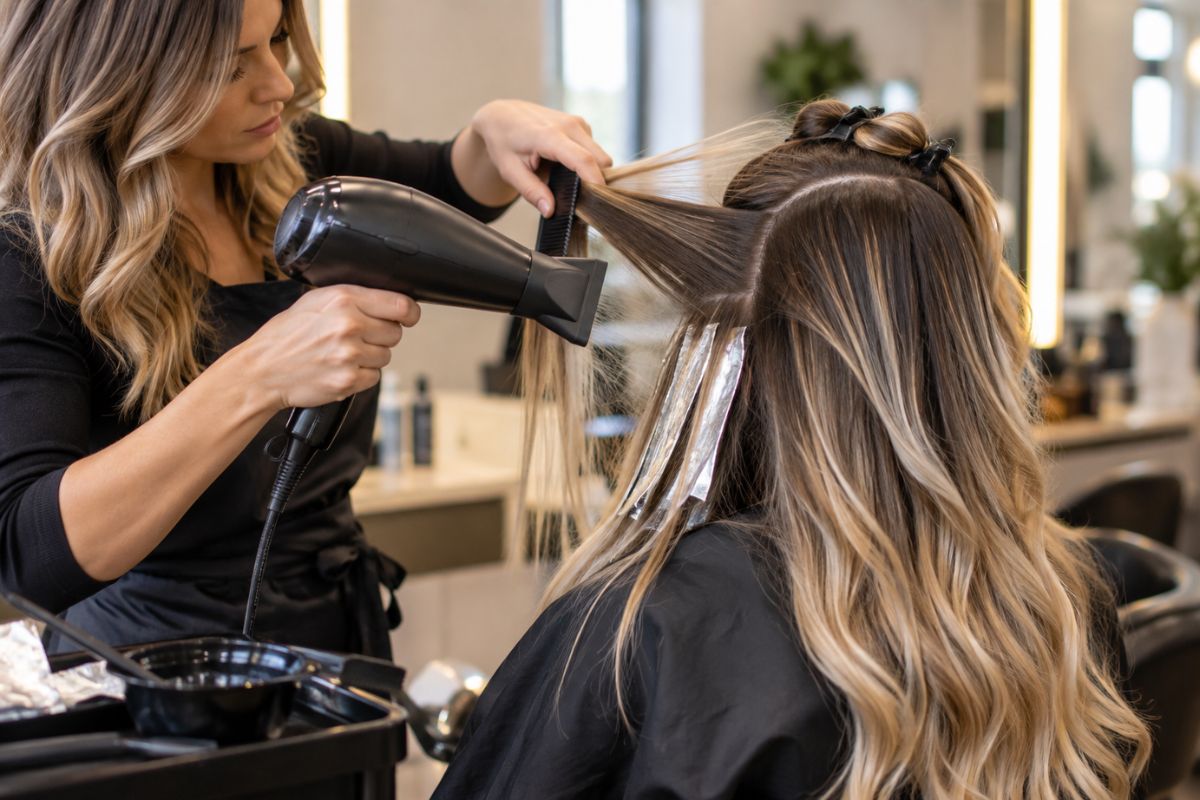
During the service, a stylist directs a blow dryer through a section to push shorter strands away. The longer strands that remain are isolated and treated. This creates selective color placement instead of applying lightener uniformly across the entire section.
The technique originated in Russia and has since gained attention internationally. Its appeal comes from the control it offers when creating blended highlights.
It’s not a damage-free lightening method. If lightener is used, the hair undergoes a chemical process that can affect its condition. Previous color treatments, the amount of lift required, and the hair’s condition all influence the result.
How Does AirTouch Hair Work?
The exact process varies by stylist and desired result. A typical appointment may include:
- Consultation: The stylist assesses your current color, hair condition, color history, and desired result.
- Sectioning: The hair is separated into sections for controlled application.
- Blow-drying: Air is directed through each section to remove shorter strands.
- Strand selection: The longer strands that remain are selected for lightening or coloring.
- Lightener application: The selected hair is treated and may be placed in foil for processing.
- Processing and rinsing: The color or lightener is processed and rinsed.
- Toning or glossing: A toner or gloss may be used to refine the finished shade.
- Styling: The hair is then dried and styled to reveal the final result.
Previous bleaching, permanent color, chemical treatments, and repeated heat styling can all affect how hair responds to further lightening.
Who Is AirTouch Hair Suitable For?
There’s no single hair type that automatically makes someone a good or poor candidate for AirTouch. A stylist should consider your natural color, hair condition, previous treatments, texture, desired result, and maintenance expectations.
Someone with healthy, untreated hair will likely have more options available to them. Those with heavily lightened or color-treated hair may face more limitations.
AirTouch for Different Hair Types
AirTouch can be adapted to suit different hair types. However, it can be more technically demanding on highly curly or textured hair, where controlled strand separation requires extra precision.
Straight and wavy hair allows for more predictable strand separation. Curly and textured hair requires the stylist to consider the natural pattern and how strands behave during sectioning. Hair density also matters since fine, thick, or very dense hair may need different application strategies.
Your hair texture alone should not determine whether AirTouch is appropriate. A stylist should assess your hair and the result you want.
AirTouch for Colored or Previously Lightened Hair
Your color history can be just as important as your current shade.
Previous highlights, bleach, permanent color, box dye, and other chemical services can affect how evenly hair lifts. Previously lightened hair may also have varying levels of porosity or structural damage.
A stylist may need to assess your existing color before deciding if AirTouch is appropriate. The target color may need adjustment if further lightening could harm the hair’s condition.
If you have had previous color services, tell your stylist what was used and when. Even older colors can affect a new lightening service.
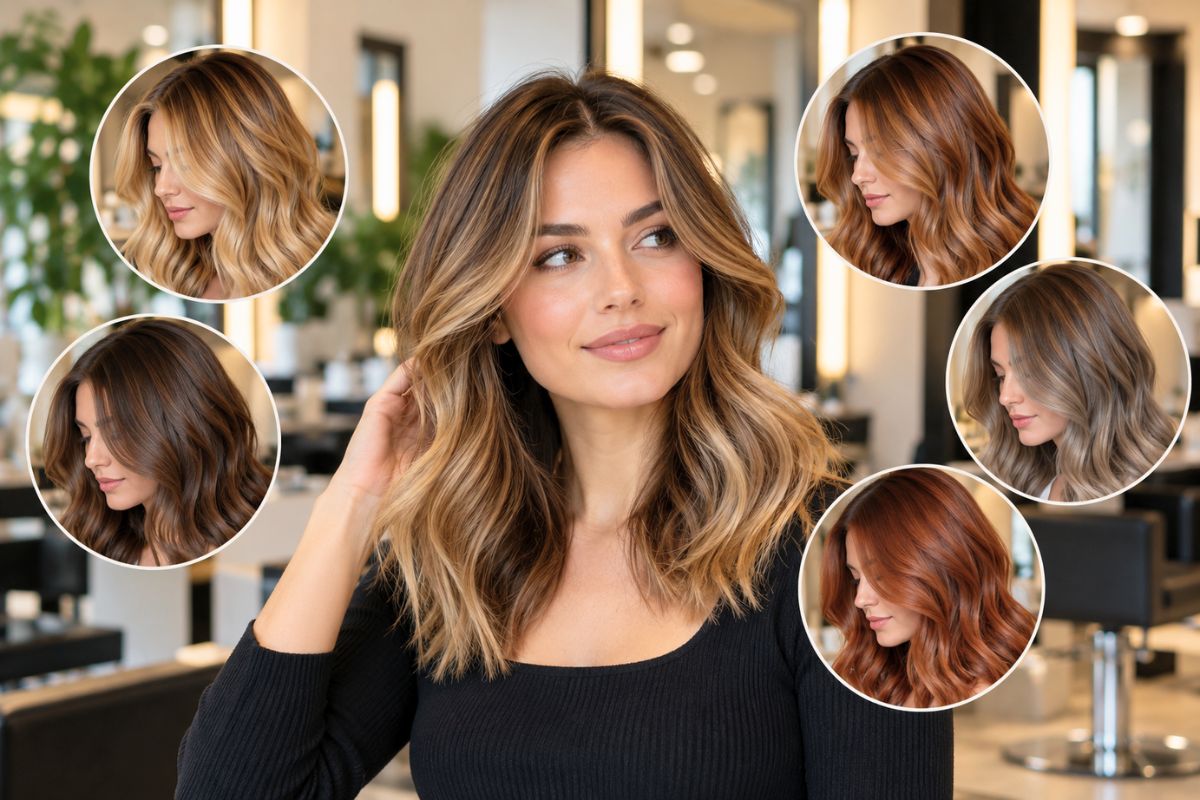
AirTouch for Dark Hair
AirTouch can be performed on dark hair, but the desired result determines how much lightening is needed.
Subtle dimensions may require less lift. A significantly lighter result can expose warm underlying pigments like red, orange, or yellow. Previous color can complicate the process because artificial pigment may respond differently than natural, untreated hair.
A reference photo can help communicate your preferred result, but it shouldn’t be treated as a guarantee. Starting color, previous treatments, and hair condition all affect the final shade.
AirTouch Hair Before and After
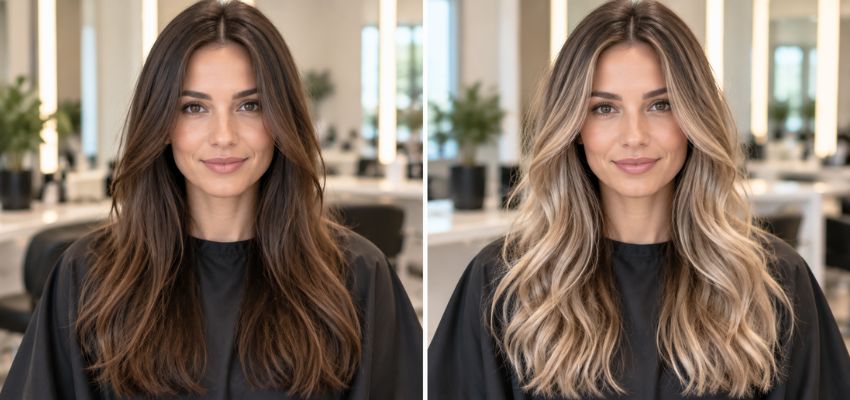
Before and after examples give a clearer picture of what AirTouch can achieve. They help you identify the level of brightness and contrast that suits you best.
When comparing results, look beyond the finished color. Useful before-and-after examples should show the starting hair and finished result under similar conditions.
Consider:
- Starting hair color
- Natural root color
- Previous color or highlights
- Hair length and density
- Amount of lightening
- Finished tone
- Overall brightness and contrast
The same technique can produce different results on different clients. For example, natural dark brown hair may respond differently than previously highlighted blonde hair.
For that reason, before-and-after photos are most useful when the starting point is similar to your own hair.
Benefits of AirTouch Hair
AirTouch is generally chosen for its blended color effect and selective application.
Potential benefits include:
- Blended, dimensional color: Selective placement can create variation in brightness rather than a uniform block of color.
- Softer-looking grow-out: A blended transition can make regrowth less visually abrupt.
- Customizable color placement: Brightness and placement can be adjusted to the starting color and desired result.
- Selective lightening: Airflow removes some shorter strands before application, so not every strand in the section is necessarily treated.
These benefits don’t make AirTouch suitable for everyone. The result depends on technique, hair condition, color history, and the stylist’s approach.
Potential Drawbacks of AirTouch Hair
AirTouch can require more time and technical precision than simpler color services. It also involves chemical lightening when a lighter result is desired.
- Longer appointments: Sectioning and strand selection can lengthen the service, especially on long, thick, or dense hair.
- Higher cost: A detailed color service may cost more than simpler highlighting depending on the work required.
- Potential effect on hair condition: Lightening can affect hair condition, especially when substantial lift is required or the hair has already been chemically treated.
- Suitability limitations: Previously lightened, heavily colored, or compromised hair may require a different approach.
- Maintenance: Even a blended result may require toning, refreshing, or further lightening to keep the desired look.
AirTouch Hair vs. Balayage: What’s the Difference?
AirTouch and balayage both create soft, dimensional color but typically use different application methods. They can also be combined, as in AirTouch balayage.
AirTouch uses controlled airflow to remove shorter strands before selected hair is lightened or colored. Traditional balayage generally involves freehand painting of color or lightener onto selected sections.
- Result: Both can produce blended color, but the finish depends on placement, formulation, and technique.
- Grow-out: Both can be designed for a softer grow-out, depending on color placement and contrast.
- Maintenance: Neither has a universal maintenance schedule. Natural growth, color contrast, and the desired appearance affect how often the color needs refreshing.
- Appointment time: Both vary according to hair length, density, color history, and complexity.
- Cost: Pricing depends on the amount of work, products, hair characteristics, and salon.
- Suitability: Hair condition, previous color, and the desired outcome should be considered for either technique.
The choice is less about finding a universally better technique and more about choosing the application method that fits your hair and desired result.
How Much Does AirTouch Hair Cost?
AirTouch hair price varies between salons and clients. No single cost applies to every appointment.
The amount of work required is a major factor. A full-head service on long, dense hair may take considerably more time and product than a partial service on shorter hair.
What Affects AirTouch Hair Price?
Pricing may depend on:
- Hair length: Longer hair generally requires more product and working time.
- Hair density: Thick or dense hair may require additional sections and application time.
- Starting color: Darker hair may require more lightening to reach a lighter target shade.
- Previous color: Existing color can make the service more complex.
- Amount of lightening: A subtle change may require less work than a significant transformation.
- Color complexity: Multiple tones or detailed placement can increase the work involved.
- Toning or glossing: Additional color services may be needed to refine the finished shade.
When requesting a price, provide your hair length, density, current color, and color history. This gives the stylist a better basis to estimate the service.
How Long Does AirTouch Hair Last?
AirTouch has no fixed lifespan. How long the color looks as you want depends on several factors. These include natural hair growth, starting color, and contrast between natural and lightened hair. Color maintenance routines and your preferred look also play a role.
A blended result may make regrowth less noticeable because there’s no sharp line between the natural root and lighter sections. However, the color itself can still change over time.
Toners and glosses can fade while natural hair continues to grow, so you may want a refresh before the lightened sections need to be redone.
Instead of relying on a fixed six- or twelve-month timeframe, maintenance should be based on the look you want to maintain.
How to Care for AirTouch Hair
Because AirTouch involves color-treated or lightened hair, care should focus on maintaining its condition and color.
- Use products designed for color-treated hair.
- Follow your stylist’s recommendations for toning and maintenance.
- Use heat protection before styling.
- Keep lightened hair conditioned.
- Avoid unnecessary heat or chemical processing between appointments.
- Follow the maintenance schedule appropriate for your color.
Your routine should reflect the condition of your hair rather than follow a one-size-fits-all approach.
Frequently Asked Questions
Is AirTouch hair damaging?
AirTouch is not damage-free. When lightener is used, the hair undergoes a chemical process that can affect its condition.
The airflow technique separates shorter strands before the selected hair is treated. This means some strands may not be exposed to lightener. Even so, the overall effect on hair condition depends on factors like the hair’s starting condition, previous color services, amount of lift required, and processing time.
A stylist should assess your hair before undertaking significant lightening.
How long does an AirTouch appointment take?
Appointment time varies according to hair length, density, starting color, and the complexity of the desired result.
Because sectioning and airflow can be detailed, AirTouch can take longer than simpler highlighting services. Ask the salon for an estimate based on your hair instead of relying on a standard timeframe.
Can you get AirTouch on previously colored hair?
Possibly, but previous color can affect both the process and achievable result.
Previously lightened hair may have different porosity levels, while permanent or darker artificial color can make further lightening more complicated. Your stylist may recommend adjusting the target shade or taking a more gradual approach.
Provide your stylist with an accurate color history during your consultation.
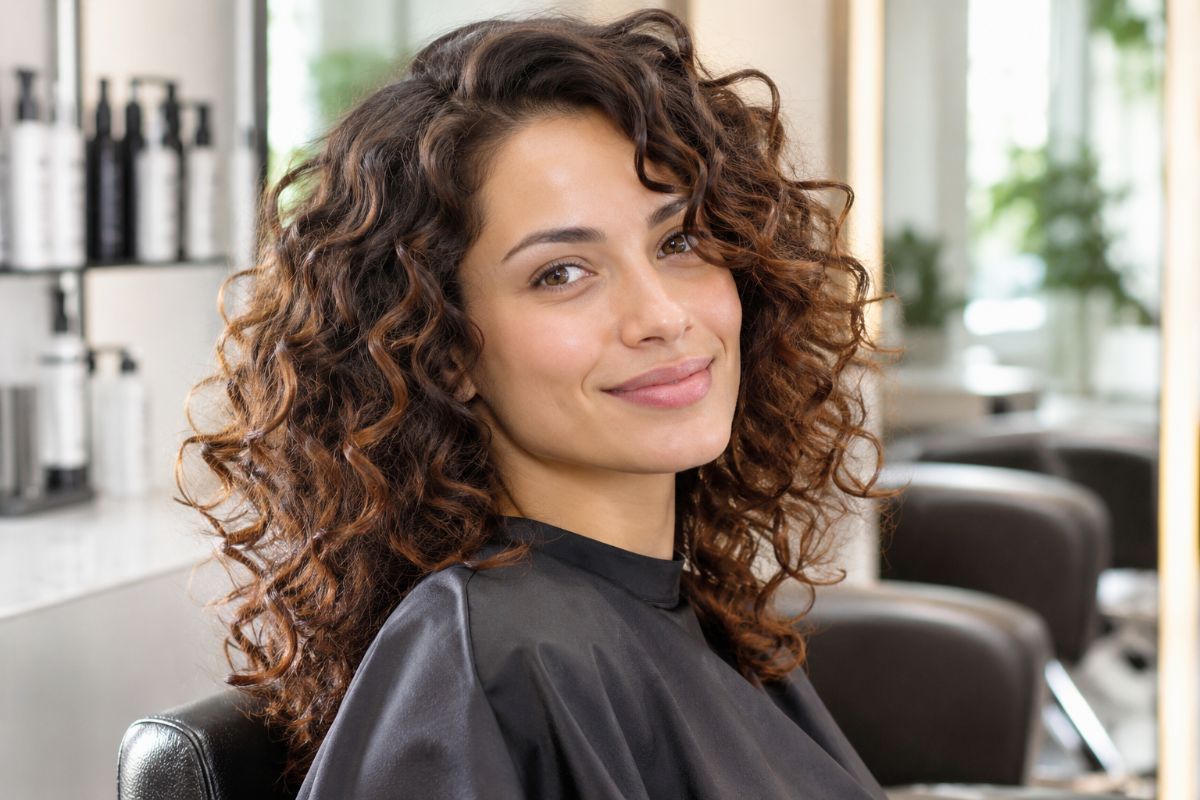
Can AirTouch be done on curly or textured hair?
AirTouch can be considered for curly or textured hair, but the technique may require additional skill and adaptation.
The natural pattern and density of textured hair affect how predictably shorter strands separate during airflow. A stylist experienced with your hair texture can assess if the technique is appropriate for your desired result.
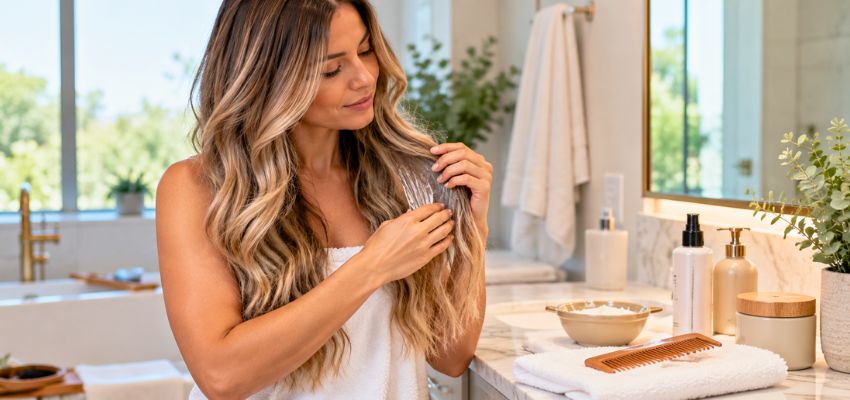
Is AirTouch Hair Right for You?
AirTouch hair uses controlled airflow to separate shorter strands from longer ones. The remaining hair is then lightened or colored. This process creates soft, dimensional color with a naturally blended transition.
Whether AirTouch is right for you depends on several factors, including hair condition, color history, starting shade, desired result, and maintenance preferences. Each should be assessed before significant lightening, especially if your hair has been colored or chemically treated.
If you’re considering AirTouch in the Wellington area, visit Salon Suites Wellington for additional hair and beauty resources. A consultation with a qualified stylist can help clarify realistic results, maintenance needs, and pricing for your hair.
Rent Salon Space In Wellington Florida
Rent salon space in Wellington with us. Whether you’re a hairstylist, nail technician, or any other beauty professional, we provide the ideal environment to help your business thrive. Our Wellington salon suites offer a wide range of benefits, including complimentary cleaning services, flexible lease terms, and a welcoming atmosphere designed to make your clients feel at home. Elevate your career and build your brand by leasing salon space in Wellington.

About The Author
Meet Rei Bayucca, a professional writer and passionate expert in all things related to beauty. Every article is purposely designed to assist you in tackling your most challenging dilemmas. Rei’s knack for creating engaging content is guaranteed to ignite your curiosity.