10 Nail Care Tips That Will Transform Your Nails in 30 Days
Published November 12, 2026
Brittle nails, peeling edges, frequent breakage, and dry cuticles can make nails look unhealthy even after a fresh manicure. Everyday habits cause these problems. Long water exposure, harsh cleaning products, and improper nail treatments are common culprits.
Consistent nail care can improve your nails’ appearance and prevent further damage. You do not need expensive products or frequent salon visits. Simple habits like moisturizing, trimming properly, grooming gently, and protecting your hands can make a real difference.
These 10 nail care tips can help you build healthier habits over 30 days. They improve the look of your natural nails and reduce preventable damage. Some improvements may appear within a month, but growing out a damaged nail takes much longer.
10 Essential Nail Care Tips for Healthier, Stronger Nails
Healthy-looking nails require consistent maintenance rather than occasional treatments. Incorporate these practical habits into your routine to protect your nails and reduce everyday damage.
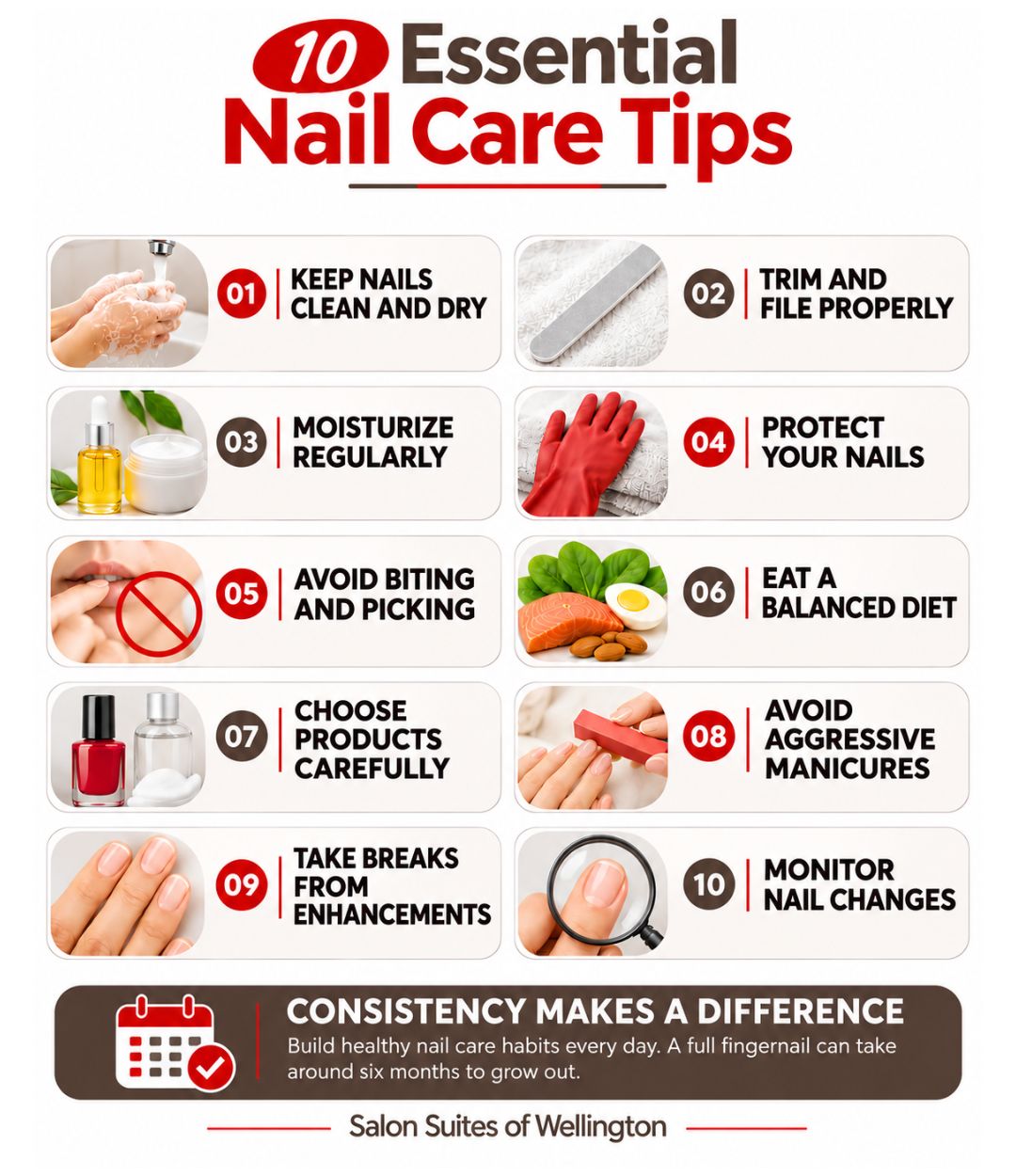
1. Keep Your Nails Clean and Dry
Wash your hands regularly with soap and water, paying attention to the areas underneath your nails. A soft nail brush can help remove stubborn dirt, but gentle cleaning is usually sufficient. Avoid aggressive scrubbing that may irritate the surrounding skin.
Dry your hands thoroughly after washing, especially around and under your nails. Repeated or prolonged water exposure can make nails soft, peeling, or split, especially when your hands are often submerged.
Keep your nails at a manageable length to make cleaning easier. The Centers for Disease Control and Prevention (CDC) recommends keeping nails short and clean to reduce germ buildup.
2. Trim and File Your Nails Properly
Regular trimming helps prevent snags, uneven edges, and accidental breakage. Use sharp nail clippers or manicure scissors, taking care not to cut too close to the surrounding skin.
Follow these basic nail grooming practices:
- Trim your nails to a comfortable length without cutting into the surrounding skin.
- Use a fine-grit nail file to smooth rough edges.
- File with gentle strokes in one direction rather than repeatedly sawing back and forth.
- Avoid excessive buffing, which can thin the natural nail plate.
Trim your nails as needed based on growth and preferred length. Clean your grooming tools before each use. Avoid sharing nail tools unless properly sterilized between users.
3. Moisturize Your Nails and Protect Your Cuticles
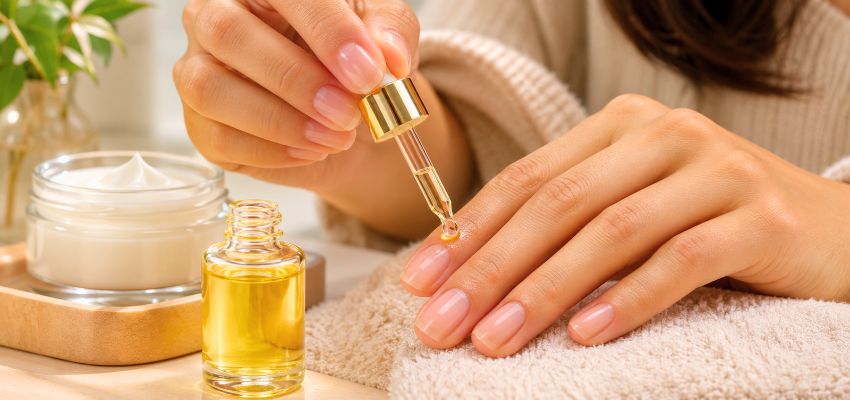
Dry nails and surrounding skin become more susceptible to cracking, splitting, and peeling. Use hand cream and cuticle oil regularly. They lock in moisture and keep the skin around your nails comfortable.
Use hand cream after washing your hands and before bedtime. Jojoba and almond oils are common ingredients in cuticle products. Other moisturizing ingredients can also soften dry skin.
Protect your cuticles rather than cutting or aggressively pushing them back. These thin layers of skin form a barrier that helps prevent germs from entering the nail growth area. If you develop a hangnail, carefully trim the loose skin with clean nail clippers instead of pulling or biting it.
4. Protect Your Nails From Harsh Chemicals and Excessive Water
Detergents, cleaning products, and long contact with water can leave nails soft or prone to splitting.
Wear waterproof gloves when washing dishes, cleaning bathrooms, or handling household chemicals. Choose gentle hand soaps when possible and avoid unnecessary exposure to harsh substances.
After household chores, dry your hands thoroughly and apply moisturizer. These precautions limit environmental damage without reducing normal handwashing.
5. Avoid Biting, Picking, and Using Your Nails as Tools
Nail biting and picking can damage the nail plate and surrounding skin, increasing the risk of irritation and infection. Using your nails to open packages, scrape labels, or pry objects loose can also cause cracks and breakage.
If you bite your nails, keep them neatly trimmed. Try a bitter-tasting nail coating to discourage the habit. Identify triggers and use a stress ball or fidget item to keep your hands occupied.
Avoid pulling off hangnails or peeling damaged nail layers. Trim loose edges carefully and allow the nail to grow out naturally.
6. Eat a Balanced Diet That Supports Nail Health
Your nails need adequate nutrition to grow normally. Keratin, the main protein in the nail plate, is produced naturally by the body.
Include an assortment of nutrient-rich foods in your diet:
- Protein: Eggs, fish, chicken, beans, and lentils provide amino acids needed for normal tissue maintenance.
- Iron: Lean meat, spinach, beans, and fortified cereals provide iron, which supports normal oxygen transport.
- Zinc: Nuts, seeds, seafood, and whole grains provide zinc, a mineral involved in normal cell growth and function.
- Biotin: Eggs, nuts, seeds, and certain vegetables contribute to biotin intake.
These nutrients support normal bodily functions. Eating certain foods does not guarantee faster nail growth or stronger nails.
Most people do not need biotin supplements, and evidence of their benefits is limited for those without a deficiency. Consult a healthcare professional before taking supplements. High-dose biotin can interfere with certain laboratory tests and potentially affect medical results. For more information, see the NIH Office of Dietary Supplements’ biotin fact sheet.
7. Choose Nail Polish and Removers Carefully
Frequent polish and harsh removal methods can dry out your nails and damage them.
Apply a base coat before the polish to help reduce staining. When removing polish, avoid scraping or peeling it off, as this can eliminate the layers of the natural nail.
Acetone-free removers may be less drying for some people but are not automatically better for every nail type or polish formula. Use removers as directed and moisturize your nails afterward.
If your nails turn brittle or start to peel, give them a break. Skip polish and artificial enhancements while they recover.
8. Avoid Aggressive Manicures and Improper Nail Treatments
Manicures should improve nail appearance without damaging the natural nail plate. Over-filing, hard buffing, cutting cuticles, and rough product removal thin your nails and irritate the skin around them.
Avoid treatments that aggressively remove layers of the natural nail. Never allow a technician to cut your cuticles, as this can compromise their protective function.
When visiting a nail salon, look for clean workstations and good hand hygiene. Make sure reusable tools are properly sterilized between clients. Ask how tools are prepared and avoid services involving painful or aggressive nail preparation.
9. Give Your Natural Nails a Break From Artificial Enhancements
Gel polish, acrylics, and other artificial enhancements can look great. But applying and removing them again and again may damage your natural nails.
Acrylic application usually involves filing the natural nail surface, which can thin the nail. Gel enhancements can also cause peeling, cracking, and brittleness, particularly when removed improperly.
If you prefer artificial nails, consider using them less frequently. The American Academy of Dermatology (AAD) suggests choosing soak-off gel products over acrylics. Remember that gel products can still damage your nails.
Never pick or peel off artificial nails. Remove them the right way. If your natural nails turn thin, brittle, or damaged, give them a break.
10. Monitor Your Nail Health and Address Unusual Changes
Regularly checking your nails can help you recognize potential problems early. Healthy nails usually look consistent. Persistent pain, swelling, redness, or other unusual changes around the nails may signal a problem.
Watch for changes such as:
- Persistent or unexplained yellow or green discoloration.
- New or changing dark streaks in a nail.
- Unusual thickening or changes in nail shape.
- Nails separating from the underlying nail bed.
- Swelling, redness, or pain around the nails.
These changes can have various causes, including infections, injuries, and underlying medical conditions. A new or changing dark streak needs particular attention. See a dermatologist promptly rather than treating it as a cosmetic issue. The American Academy of Dermatology provides additional guidance on nail changes that require medical attention.
Don’t cover persistent nail changes with polish or artificial nails. Find out the cause first.
What to Expect From Your Nail Care Routine in 30 Days
A 30-day nail care routine gives you time to establish healthier habits and assess how your nails respond. Fingernails grow slowly and usually take about six months to fully replace.
Use this weekly schedule to stay consistent.
Week 1: Establish Basic Nail Care Habits
Trim and file your nails, smooth rough edges, and establish proper handwashing and drying habits. Apply hand cream regularly and avoid biting or picking your nails.
Week 2: Focus on Moisture and Nail Protection
Apply cuticle oil, wear gloves during household chores, and reduce exposure to harsh products. If your nails are brittle, consider limiting polish and artificial enhancements.
Week 3: Maintain Consistent Nail Care Practices
Continue moisturizing, cleaning your tools, and trimming your nails when needed. Pay attention to dryness, peeling, and breakage. Protecting your nails can help prevent additional damage while they grow.
Week 4: Evaluate Your Progress and Maintain Your Results
Compare your nails with how they looked at the beginning of the month. Look for improvements in moisture, grooming, and breakage rather than expecting a completely new nail.
Continue the practices that work for you. Maintaining your nail care beyond the first month pays off more than treating it as a one-time challenge.
Frequently Asked Questions
How often should you follow a nail care routine?
Basic nail care should be part of your daily habits. Clean and dry your hands regularly, moisturize after washing, and protect your nails during chores. Trim and file them as needed based on their growth and preferred length.
How long does it take to see results from better nail care?
Softer cuticles and less dryness may become noticeable within days or weeks. Fingernails grow about 3 millimeters per month. Replacing a whole nail takes around six months. A 30-day routine is a starting point, not a guarantee of complete nail transformation.
What is the best oil for dry nails and cuticles?
Jojoba and almond oils are popular options for moisturizing dry cuticles. Apply a small amount around each nail and massage gently into the surrounding skin. Other moisturizing products can help, so choose one that works well for your skin.
Why do my nails keep peeling and breaking?
Common causes include frequent water exposure, harsh cleaning products, physical trauma, and rough manicure habits. Nutritional deficiencies and certain medical conditions may contribute. If the problem persists despite proper care, consult a dermatologist.
Can nail polish make your natural nails weak?
Frequent applications and improper removal can contribute to dryness and damage. Peeling off polish, buffing too much, and repeatedly using drying removers can worsen existing problems. Use gentle removal techniques and take breaks when necessary.
Should you take a break from gel or acrylic nails?
Taking a break can help if your natural nails have become thin, brittle, or damaged. Repeated applications and removals may cause nail plate thinning and breakage. Avoid covering persistent damage with another enhancement.
Does drinking more water make your nails stronger?
Staying properly hydrated is good for your overall health. Drinking extra water won’t directly strengthen your nails or speed up their growth. Nail health depends on nutrition, genetics, habits, and underlying health conditions.
Build Healthy Nail Care Habits That Last
Healthier-looking nails come from consistent care, not complicated treatments. Keep your nails clean, moisturize often, protect them from daily wear, and choose nail treatments carefully. Use the 30-day routine as a starting point, then maintain the habits that work for you. Remember improving nail appearance takes less time than growing out a damaged nail.
For more beauty and nail care information, explore the Salon Suites of Wellington blog. Explore articles on nail enhancements, manicure techniques, and other beauty topics to help you make informed personal care choices.
Rent Salon Space In Wellington Florida
Rent salon space in Wellington with us. Whether you’re a hairstylist, nail technician, or any other beauty professional, we provide the ideal environment to help your business thrive. Our Wellington salon suites offer a wide range of benefits, including complimentary cleaning services, flexible lease terms, and a welcoming atmosphere designed to make your clients feel at home. Elevate your career and build your brand by leasing salon space in Wellington.

About The Author
Hi, I’m Corinne Grace, a nursing graduate from Riverside College who writes for hairstylists, estheticians, and beauty professionals building their own businesses. My professional background shapes how I write about the business side of running a salon suite. I write for beauty pros who want practical advice they can put to work.